Ruso has just taken up a medical post with the Twentieth Legion in Chester. It is a dark, wet settlement on the very outskirts of the Empire, on the outskirts of the world. Driven to this job by desperate personal circumstances, Ruso is merely surviving. He lives with a colleague who is a regular ladies man and handsome to boot. Added to that he doesn't get on with his boss, a penny pinching bureaucrat who is more interested in how quickly they can treat patients than treating them properly. Then on his way back from a quick drink, Ruso comes across a badly injured slave girl. He buys the girl and tends her in the hope that he can sell her on for a huge profit and solve all his problems. This is never a wise idea, particularly if you find their eyes attractive. Meanwhile girls from the very place he enjoys a quiet drink are turning up dead and Ruso is the only one who cares enough to investigate. It seems as though the Gods aren't smiling on Ruso.
For anyone who enjoys Lindsey Davis' Falco series, you really must read 'Medicius and the disappearing dancing girls'. The main character, much like Falco, is a likeable, down-trodden guy with a good heart who somehow manages to get into more scrapes than a club bouncer. The story is well written, undemanding, and easy to read. I couldn't put it down when I'd started and ended up reading it in a day.
Downie's characters are very well written. I particularly like the portrayal of Priscus who is the archetypal bureaucrat you just want to slug. He makes pettiness into a fine art form and puts me in mind of one or two people I've come across in my years of working in local government. I liked Albanus as a character too and hope that he appears in any future instalments. I have a bit of a soft spot for clerks who come good! One character that felt a bit different was that of Tilla. A strong woman who doesn't want to be a slave who to begin with seems not to want to live but her spirit won't let her so she plans to escape instead. Her relationship with Ruso is not a typical slave/master relationship, nor is it overtly romantic either. Although Downie leaves scope for the two to fall for each other properly it doesn't seem to quite happen. To me that is far preferable to happy domesticity.
The setting of the book is fairly well written. Downie has certainly done her research and there doesn't seem to be any glaring factual mistakes. I particularly enjoyed the way she shows how far the Roman medical profession is behind modern medicine. The fact that most people are terrified of the doctors and that they can be a bit ruthless at times. It made the whole thing feel that little bit more real. It can be too tempting to turn your hero into a proper hero, able to cure anyone of anything. Ruso isn't a bad doctor, but nor is he set up as the greatest doctor either.
There are quite a few authors on the market whose books are historical crime stories set in the Roman period, Lindsey Davis, Steven Saylor, Rosemary Rowe and Marilyn Todd to name but a few. I really feel that Downie deserves to be added to this list and it is my hope that Ruso and Tilla will enjoy another outing in the not too distant future.
*4 stars*
Saturday, September 01, 2007


The Kings Last Song by Geoff Ryman
In a field in Cambodia the find of a lifetime is uncovered during an archaeological dig. It is the memoir of Cambodia's greatest king, preserved on sheets of gold for centuries. Cambodia is in turmoil, still reeling from the civil wars that have torn the country apart, and the massacres by Pol Pot. The treasure is stolen and the director of the excavation kidnapped. A young moto-boy and an ex-Khmer Rouge solider, brought together by their concern for the dig director, join forces to try and recover the memoirs. Yet with such opposing backgrounds and in a country on a knife edge their quest is in jeopardy before they even start. They must overcome their pasts and fight for a brighter future for their beloved country.
The book is set in multiple time frames in Cambodia, from the present day, to the 12th century of Jayavarman, to the memories of Luc and Map over the last 40-50 years. The book centres on the violent past of the country, not only in the past century but also in the 12th century. Cambodia is a country still struggling to come to terms with itself and re-build itself. Most of the characters are Cambodian and reflect the different backgrounds, from Map the ex-Khmer Rouge soldier who switched sides to William, a young man orphaned by the fighting, to Pich, one of the leaders of the opposition, ruthless and intelligent but fighting for a better future for Cambodia. There are also the odd Vietnamese characters and of course the French dig director to help show other characteristics of the country.
The inclusion of a story running parallel to the main narrative, centuries before the present day is an interesting device. The violence and turmoil of this story seems to show that the events of the most recent century are not new or indeed unique. It tells the story of a king striving to obtain peace but also, towards the end, yearning for power. It also shows that humans can never be flawless. We can all have good intentions but there will be times when we go against these.
Although the story was readable it didn't grab me as it has done others who recommended the book to me in the first place. I know nothing of this history of Cambodia and although have heard the names 'Pol Pot' and 'Khmer Rouge' I only know they were involved in genocide. I know absolutely nothing beyond that and I think that meant I got far less out of the story than I should have done. I admit I probably know more about Cambodia now that I did before I read the book, but still not enough to appreciate the nuances of the book. It has made me wish to read up a bit more about it though, so perhaps it has served one of Ryman's aims when writing the book!
It is quite clear that Ryman is in love with Cambodia. Despite the misery and the violence in the book there is a strand of hope running throughout it. Hope and desire to make Cambodia a better place. To see the country great once more. By the end of the book you sincerely hope that one day the characters will succeed in their quest.
This is definitely a book for anyone with an interest in Asia, particularly Vietnam & Cambodia. It is a book written in the hope that things will improve. It's certainly not a tourist travel novel, written with the sole intention of getting you to visit and spend money. It is definitely something that should be read if you want to learn about the country and the people who live there. It is meant to highlight the problems that the country faces but it does not suggest that tourism and foreign intervention will cure them.
*3 stars*
The book is set in multiple time frames in Cambodia, from the present day, to the 12th century of Jayavarman, to the memories of Luc and Map over the last 40-50 years. The book centres on the violent past of the country, not only in the past century but also in the 12th century. Cambodia is a country still struggling to come to terms with itself and re-build itself. Most of the characters are Cambodian and reflect the different backgrounds, from Map the ex-Khmer Rouge soldier who switched sides to William, a young man orphaned by the fighting, to Pich, one of the leaders of the opposition, ruthless and intelligent but fighting for a better future for Cambodia. There are also the odd Vietnamese characters and of course the French dig director to help show other characteristics of the country.
The inclusion of a story running parallel to the main narrative, centuries before the present day is an interesting device. The violence and turmoil of this story seems to show that the events of the most recent century are not new or indeed unique. It tells the story of a king striving to obtain peace but also, towards the end, yearning for power. It also shows that humans can never be flawless. We can all have good intentions but there will be times when we go against these.
Although the story was readable it didn't grab me as it has done others who recommended the book to me in the first place. I know nothing of this history of Cambodia and although have heard the names 'Pol Pot' and 'Khmer Rouge' I only know they were involved in genocide. I know absolutely nothing beyond that and I think that meant I got far less out of the story than I should have done. I admit I probably know more about Cambodia now that I did before I read the book, but still not enough to appreciate the nuances of the book. It has made me wish to read up a bit more about it though, so perhaps it has served one of Ryman's aims when writing the book!
It is quite clear that Ryman is in love with Cambodia. Despite the misery and the violence in the book there is a strand of hope running throughout it. Hope and desire to make Cambodia a better place. To see the country great once more. By the end of the book you sincerely hope that one day the characters will succeed in their quest.
This is definitely a book for anyone with an interest in Asia, particularly Vietnam & Cambodia. It is a book written in the hope that things will improve. It's certainly not a tourist travel novel, written with the sole intention of getting you to visit and spend money. It is definitely something that should be read if you want to learn about the country and the people who live there. It is meant to highlight the problems that the country faces but it does not suggest that tourism and foreign intervention will cure them.
*3 stars*
The Blackpool Highflyer by Andrew Martin
In the hot summer of 1905 Jim Stringer has work to do. For many the factories and mills of Halifax are closing for a short holiday and it's off to Scarborough and Blackpool. Jim is a fireman and it's his job to man the excursion trains for the summer break. However on one trip to Blackpool the train hits a millstone on the line and is derailed. Not convinced this is an idle act of vandalism, Jim thinks the Hind's Mill excursion train to Blackpool has been targeted specifically. There are several people with motives, but is Jim right or is he just chasing shadows?
This is the second book in the Jim Stringer series and immediately precedes 'The Lost Luggage Porter' and sees Jim still working as a fireman before his career change to the railway police. For those of you who have read 'Lost Luggage Porter' (or even my review of it) you may find this book jars with your knowledge of Jim and how he came to move to York. I for one was scratching my head over it all the way to the end of the book. I think it is definitely a case of reading these books in order. Therefore I recommend to anyone who hasn't tried these books to go and read them in order, starting with 'The Necropolis Railway', to avoid confusion.
Despite the slight lack of continuity between books, this was still and fairly enjoyable romp. In some ways the story reflects the restrained characteristics we think are typical of the Victorian/Edwardian periods. Jim is fairly down to earth, doesn't pick fights, goes to work, enjoys a drink and has a passion for his railway magazines. Often the heroes of crime fiction have awful foibles and depressing lives. They are womanisers, or alcoholics or bad parents. Jim has none of these foibles. He seems a pretty pleasant character with an equally pleasant wife. If anything the fact his wife cannot cook and is veering towards the suffragette cause is perhaps the most controversial thing about Jim and his family. In some ways this makes him a unique character in the crime fiction genre.
There’s not a lot more that can be said about this book. A book to pass the time rather than a 'must read' perhaps.
*3 stars*
This is the second book in the Jim Stringer series and immediately precedes 'The Lost Luggage Porter' and sees Jim still working as a fireman before his career change to the railway police. For those of you who have read 'Lost Luggage Porter' (or even my review of it) you may find this book jars with your knowledge of Jim and how he came to move to York. I for one was scratching my head over it all the way to the end of the book. I think it is definitely a case of reading these books in order. Therefore I recommend to anyone who hasn't tried these books to go and read them in order, starting with 'The Necropolis Railway', to avoid confusion.
Despite the slight lack of continuity between books, this was still and fairly enjoyable romp. In some ways the story reflects the restrained characteristics we think are typical of the Victorian/Edwardian periods. Jim is fairly down to earth, doesn't pick fights, goes to work, enjoys a drink and has a passion for his railway magazines. Often the heroes of crime fiction have awful foibles and depressing lives. They are womanisers, or alcoholics or bad parents. Jim has none of these foibles. He seems a pretty pleasant character with an equally pleasant wife. If anything the fact his wife cannot cook and is veering towards the suffragette cause is perhaps the most controversial thing about Jim and his family. In some ways this makes him a unique character in the crime fiction genre.
There’s not a lot more that can be said about this book. A book to pass the time rather than a 'must read' perhaps.
*3 stars*
Wednesday, August 22, 2007
The Bookseller of Kabul by Asne Seierstad
It is 2002, a few months after the fall of the Taliban in Afghanistan. A Norwegian journalist, Asne Seierstad, stumbles across a bookshop in Kabul. After months out with the troops a conversation with the bookseller about topics other than the war is refreshing. Yet Asne finds herself drawn back to Sultan Khan, the bookseller who defied both the Soviets and the Taliban to save precious books. She resolves to write about his life and that of his family. Welcomed as a guest into his home Asne gets to view a unique picture of the rapidly changing world of both the men and the women of Afghanistan.
After reading the 'Kabul Beauty School' I was determined to read 'The Bookseller of Kabul' in the hope that it would be as equally enjoyable. I must admit it was a book that was hard to put down and I read it within 24 hours. In some ways I wasn't expecting this after noting on the frontispiece that it was a translation, and my most recent experience of a translation (see my review of Sister Pelagia and the White Bulldog) had not been positive. It was definitely easy to read and despite the slightly odd format where events are strung together and it is difficult to grasp when these events take place.
The book is extremely different from that of the 'Kabul Beauty School'. Asne features very little in the book, recording events rather than participating for the most part. Instead members of the family take it in turns to share the lime light. Men and women both get their stories told, although I felt that perhaps slightly more women had their stories recounted than men. It is also set at a different time in the liberation of Afghanistan. While Deborah Rodriguez writes about her experiences in 2003, Asne is covering a period in early 2002 when the Taliban have only just been ousted. Life was almost as restricted as it had been under the Taliban as people were too afraid to defy their rule, despite the fact they could no longer punish them. Also, Asne lives with a large family unit whereas Deborah has her own living space and makes her own small family unit. The list of differences between the books is endless and I would definitely recommend the pair as a reading comparison project. How can two women write such different accounts of one city, one country, one culture?
I do think that I read these books in the right order. Whilst the 'Kabul Beauty School' infused me with hope that things will get better, are getting better, 'The Bookseller of |Kabul' was less hopeful. I felt that the author was being as impartial as possible but I felt so sorry for almost all the members of the family. The first wife ousted from her position of authority, the unmarried sisters who are treated no better than slaves, the eldest son who desired to study, meet women and to have a life beyond the four walls of the bookshop etc etc. Sultan Khan is the ultimate patriarch with laudable ideals for a better Afghanistan yet with boundless wrath and an unforgiving nature for any family members who step out of line or question his authority. He is a man constricted by tradition and culture. By the end of the book you do wonder what effect Asne had on the family (something you wonder even more after reading the epilogue). It is hard to see what hope there is and whether things will ever change in the country. You also find yourself wondering if change is always a good thing and what sacrifices should be made.
I thoroughly enjoyed this book, and although it was hard to sympathise with the majority of characters did find myself drawn to them and eager to learn their fate. They are real people with foibles as much as anyone. People with contradictions to their character, but who all ultimately are trying to improve their lot, in whatever small ways they can. I would recommend this to anyone who has read 'The Kabul Beauty School' or is interested in learning more about the customs, traditions and history of Afghanistan. I have no doubt I will be adding Asne's other book 'A Hundred and One Days' which cover her time in Baghdad to my reading list. I would love to continue reading books of this ilk, but perhaps about countries other than Afghanistan.
*5 stars*
If you are interested in books about life in Afghanistan, have you tried 'The Kabul Beauty School by Deborah Rodriguez?
After reading the 'Kabul Beauty School' I was determined to read 'The Bookseller of Kabul' in the hope that it would be as equally enjoyable. I must admit it was a book that was hard to put down and I read it within 24 hours. In some ways I wasn't expecting this after noting on the frontispiece that it was a translation, and my most recent experience of a translation (see my review of Sister Pelagia and the White Bulldog) had not been positive. It was definitely easy to read and despite the slightly odd format where events are strung together and it is difficult to grasp when these events take place.
The book is extremely different from that of the 'Kabul Beauty School'. Asne features very little in the book, recording events rather than participating for the most part. Instead members of the family take it in turns to share the lime light. Men and women both get their stories told, although I felt that perhaps slightly more women had their stories recounted than men. It is also set at a different time in the liberation of Afghanistan. While Deborah Rodriguez writes about her experiences in 2003, Asne is covering a period in early 2002 when the Taliban have only just been ousted. Life was almost as restricted as it had been under the Taliban as people were too afraid to defy their rule, despite the fact they could no longer punish them. Also, Asne lives with a large family unit whereas Deborah has her own living space and makes her own small family unit. The list of differences between the books is endless and I would definitely recommend the pair as a reading comparison project. How can two women write such different accounts of one city, one country, one culture?
I do think that I read these books in the right order. Whilst the 'Kabul Beauty School' infused me with hope that things will get better, are getting better, 'The Bookseller of |Kabul' was less hopeful. I felt that the author was being as impartial as possible but I felt so sorry for almost all the members of the family. The first wife ousted from her position of authority, the unmarried sisters who are treated no better than slaves, the eldest son who desired to study, meet women and to have a life beyond the four walls of the bookshop etc etc. Sultan Khan is the ultimate patriarch with laudable ideals for a better Afghanistan yet with boundless wrath and an unforgiving nature for any family members who step out of line or question his authority. He is a man constricted by tradition and culture. By the end of the book you do wonder what effect Asne had on the family (something you wonder even more after reading the epilogue). It is hard to see what hope there is and whether things will ever change in the country. You also find yourself wondering if change is always a good thing and what sacrifices should be made.
I thoroughly enjoyed this book, and although it was hard to sympathise with the majority of characters did find myself drawn to them and eager to learn their fate. They are real people with foibles as much as anyone. People with contradictions to their character, but who all ultimately are trying to improve their lot, in whatever small ways they can. I would recommend this to anyone who has read 'The Kabul Beauty School' or is interested in learning more about the customs, traditions and history of Afghanistan. I have no doubt I will be adding Asne's other book 'A Hundred and One Days' which cover her time in Baghdad to my reading list. I would love to continue reading books of this ilk, but perhaps about countries other than Afghanistan.
*5 stars*
If you are interested in books about life in Afghanistan, have you tried 'The Kabul Beauty School by Deborah Rodriguez?
Anne of Greengables by L. M. Montgomery
Siblings Matthew and Marilla Cuthbert decide that they can no longer manage their farm alone. The help they hired every year was always unreliable and they wanted something a bit more permanent. Hearing that one of their friends has adopted, they feel that adopting a boy and teaching him how to manage the farm will solve all their problems. Yet somehow there is a mistake and the Cuthbert's are sent 11 year old Anne. A day-dreamer who talks too much she soon manages to upset plenty of people. Yet as time passes Anne grows and learns to tame her wild imagination and her tongue and it is not long before people learn to love Anne of Green Gables.
When I was little my father recommended I should read this. For reasons I don't remember I ignored his advice. Perhaps I felt it was too 'girly' for me and too twee. For years I have avoided things like 'Little House on the Prairie' and any adult chick lit that I've seen in bookshops and libraries. So when the Book Club Forum made Anne of Green Gables their book to read for August I thought I would give it a try.
To begin with I did find the format and the story annoying and not my sort of thing. It was slow, the character of motor-mouth Anne annoyed me endlessly and I started skipping through chunks of her monologues. I also felt the story wasn't going anywhere and held very little in the way of excitement. It wasn't badly written per-se, just of it's time and directed towards children rather than adults. I decided to continue reading it though as it wasn't dire. I'm glad I did because the story does improve about half way through. You begin to realise that Anne's character is annoying on purpose and very well written by Montgomery. You find as the characters develop that Matthew is extremely shy around women (which perhaps explains why he never married) and that despite her façade, Marilla does care about others. I did find it a little disconcerting that so much of the book is dedicated to Anne when she is 11/12 and then you start leaping very suddenly through time until by the end of the book she is 16/17.
I think perhaps in some ways I was too old to read this book and enjoy it fully. I suspect I may have enjoyed it more when I was younger. Having said that perhaps it is a book that requires a certain amount of patience, something I was lacking in my youth! If you're looking for thrills and adventure this isn't the book for you. However if you're looking for a gentle, undemanding book with happy stories mingled with the sad woes of ordinary life in late 19th/early 20th century Canada then this is the right book for you. I was left wanting to know what happens next, as I know Montgomery wrote a sequel. I will be putting that on my reading list but I want to read it some wet and windy weekend in Autumn/Winter when I can curl up with a mug of hot chocolate and read a book to warm the heart. Despite it's slow start I would recommend this to others.
*4 stars*
When I was little my father recommended I should read this. For reasons I don't remember I ignored his advice. Perhaps I felt it was too 'girly' for me and too twee. For years I have avoided things like 'Little House on the Prairie' and any adult chick lit that I've seen in bookshops and libraries. So when the Book Club Forum made Anne of Green Gables their book to read for August I thought I would give it a try.
To begin with I did find the format and the story annoying and not my sort of thing. It was slow, the character of motor-mouth Anne annoyed me endlessly and I started skipping through chunks of her monologues. I also felt the story wasn't going anywhere and held very little in the way of excitement. It wasn't badly written per-se, just of it's time and directed towards children rather than adults. I decided to continue reading it though as it wasn't dire. I'm glad I did because the story does improve about half way through. You begin to realise that Anne's character is annoying on purpose and very well written by Montgomery. You find as the characters develop that Matthew is extremely shy around women (which perhaps explains why he never married) and that despite her façade, Marilla does care about others. I did find it a little disconcerting that so much of the book is dedicated to Anne when she is 11/12 and then you start leaping very suddenly through time until by the end of the book she is 16/17.
I think perhaps in some ways I was too old to read this book and enjoy it fully. I suspect I may have enjoyed it more when I was younger. Having said that perhaps it is a book that requires a certain amount of patience, something I was lacking in my youth! If you're looking for thrills and adventure this isn't the book for you. However if you're looking for a gentle, undemanding book with happy stories mingled with the sad woes of ordinary life in late 19th/early 20th century Canada then this is the right book for you. I was left wanting to know what happens next, as I know Montgomery wrote a sequel. I will be putting that on my reading list but I want to read it some wet and windy weekend in Autumn/Winter when I can curl up with a mug of hot chocolate and read a book to warm the heart. Despite it's slow start I would recommend this to others.
*4 stars*
Saturday, August 18, 2007
Harry Potter and the Deathly Hallows
Dumbledore is dead and Harry is now left to complete his work, finding the rest of the deadly Horcruxes and destroying them before Voldemort gets them. Yet he, Hermione and Ron must go into hiding as Voldemort has finally succeeded in gaining control of the Ministry of Magic. In a climate of fear and repression our heroes are the only ones who can possibly save the day. Can they complete Dumbledore's work and free the world from Voldemort's tyranny?
In this, the final installment of the Harry Potter series, all the loose ends of the previous books. Although it is not a book that can be described as breathtaking or the best thing I have ever read it was still a good read. It nicely brings the series to a close. There are some extremely sad moments and as widely publicised prior to release a couple of central characters do die. It is a much darker book than even the 'Half Blood Prince'. Parallels can be drawn between the reign of Voldemort and Nazi Germany in that those who oppose the regime must flee underground or suffer torture and imprisonment. Half bloods have to be registered and everyone has to prove if they are pure blood. There are also some really good moments where things fans have hoped for do happen. I won't spoil it by saying any more!
The action centres around Harry, Ron and Hermione as you might expect. Other characters do make appearances throughout the book, bringing a smile to the face of anyone who is a fan. Actions in previous books come back to help or haunt our characters and at the end there is a really good twist that reward some people's faith in a specific character. The storyline keeps mainly to finding the Horcruxes but the trio do find a second quest to undertake.
After the 'Half Blood Prince' I was building myself up to feeling disappointed about 'The Deathly Hallows'. However that was not the case. I found myself wanting to read it and enjoying several of the scenes, especially the one involving the radio. As said earlier, it wasn't 'the best book I have ever read' and to be honest it was very much for fans of the series rather than any newcomers. I think if anyone gave up reading earlier in the series they should try again because the end is worth getting to. There is a lot to get your head round in some respects (anyone who has read the book will know what I mean when I refer to the Deathly Hallows). If you have persevered with the books so far you're at least half way prepared. I do wonder if perhaps J K Rowling made it a bit too complex but some how it all works in the end. I suspect I will be re-reading this book when I reach a lull in my current reading list. As I don't often re-read books I think that says it all really!
*4 stars*
In this, the final installment of the Harry Potter series, all the loose ends of the previous books. Although it is not a book that can be described as breathtaking or the best thing I have ever read it was still a good read. It nicely brings the series to a close. There are some extremely sad moments and as widely publicised prior to release a couple of central characters do die. It is a much darker book than even the 'Half Blood Prince'. Parallels can be drawn between the reign of Voldemort and Nazi Germany in that those who oppose the regime must flee underground or suffer torture and imprisonment. Half bloods have to be registered and everyone has to prove if they are pure blood. There are also some really good moments where things fans have hoped for do happen. I won't spoil it by saying any more!
The action centres around Harry, Ron and Hermione as you might expect. Other characters do make appearances throughout the book, bringing a smile to the face of anyone who is a fan. Actions in previous books come back to help or haunt our characters and at the end there is a really good twist that reward some people's faith in a specific character. The storyline keeps mainly to finding the Horcruxes but the trio do find a second quest to undertake.
After the 'Half Blood Prince' I was building myself up to feeling disappointed about 'The Deathly Hallows'. However that was not the case. I found myself wanting to read it and enjoying several of the scenes, especially the one involving the radio. As said earlier, it wasn't 'the best book I have ever read' and to be honest it was very much for fans of the series rather than any newcomers. I think if anyone gave up reading earlier in the series they should try again because the end is worth getting to. There is a lot to get your head round in some respects (anyone who has read the book will know what I mean when I refer to the Deathly Hallows). If you have persevered with the books so far you're at least half way prepared. I do wonder if perhaps J K Rowling made it a bit too complex but some how it all works in the end. I suspect I will be re-reading this book when I reach a lull in my current reading list. As I don't often re-read books I think that says it all really!
*4 stars*
Saturday, August 11, 2007
An update
Hi everyone,
Well I'm slowly settling in so as you can see I've started reviewing again. I can only get access sporadically so I won't be psoting reviews as often as I would like but nevermind!
I have turned on the comment facility again so if anyone would like to add their comments about any of the books I've reviewed, please feel free to do so!
Can I also remind everyone that you can sign up for e-mail bulletins of reviews by signing up to the newsletter on the right hand side of the page. So far three of us have signed up and I'm pretty sure I've set it up so you can receive the whole review (not just a tid-bit) in your e-mails. Means you don't have to visit the blog so much to keep up with the reviews.
I've updated the A-Z listings so they're right now. Will sort out adding a list of top books reviewed as well to make it easier to find books to try.
If you're interested in what I'm likely to be reviewing in the near future I've got 'Ann of Green Gables' by L.M. Montgomery and 'To Kill or Cure' by Susanna Gregory on my pile. I have read the latest Harry Potter and will review that soon, along with the latest Ladie's Detective Agency book by Alexander McCall Smith, so lots to look forward to!
Keep reading :)
Well I'm slowly settling in so as you can see I've started reviewing again. I can only get access sporadically so I won't be psoting reviews as often as I would like but nevermind!
I have turned on the comment facility again so if anyone would like to add their comments about any of the books I've reviewed, please feel free to do so!
Can I also remind everyone that you can sign up for e-mail bulletins of reviews by signing up to the newsletter on the right hand side of the page. So far three of us have signed up and I'm pretty sure I've set it up so you can receive the whole review (not just a tid-bit) in your e-mails. Means you don't have to visit the blog so much to keep up with the reviews.
I've updated the A-Z listings so they're right now. Will sort out adding a list of top books reviewed as well to make it easier to find books to try.
If you're interested in what I'm likely to be reviewing in the near future I've got 'Ann of Green Gables' by L.M. Montgomery and 'To Kill or Cure' by Susanna Gregory on my pile. I have read the latest Harry Potter and will review that soon, along with the latest Ladie's Detective Agency book by Alexander McCall Smith, so lots to look forward to!
Keep reading :)
The Big Over Easy by Jasper FForde
Humpty Dumpty fell off a wall, but was it accident or perhaps something more sinister? An ex-convict, ladies man and millionaire philanthropist he has his fair share of enemies, including his ex-wife. DI Jack Spratt and his new assistant Mary Mary must get to the bottom of the case, and quick. The Nursery Crimes Division is the laughing stock of Reading Police force and some recent expensive cases that failed to bring convictions have got their superiors ready to shut them down. Can Spratt prove that for once his hunches are right? Can he prove Humpty was murdered, and not by the ex-wife who has conveniently died in a horrific accident at the biscuit factory. With time running out for Spratt and his misfits and an old rival trying to undermine the investigation will Spratt be on traffic duty next week?
I’ve heard lots and lots about Jasper Fforde in the past but it has taken me until now to pick up my first Jasper Fforde book. I have certainly not been disappointed. It was witty, clever, funny (not in the laugh out loud sense, more in a quiet smirk kind of way) and a good story. I didn’t see the ending coming, but it wasn’t totally unrealistic. Lots of twists and turns and red herrings just to keep you guessing. A well put together murder mystery which pokes fun at the publicity over quality of results culture we keep finding ourselves in. The clever allusions to nursery rhymes that fit in neatly to the book are well thought out. From Giorgia Porgia the legendary crime boss, to DI Jack Spratt himself who has an unfortunate habit of killing tall people.
There’s nothing negative I can really say about this book. Ok so it’s not laugh out loud funny but that’s because of the type of humour. It will certainly appeal to anyone looking for more than just a quick holiday read. It does make you think, but not too much. The pace is good and like all the best films, just when you think they’ve solved it they haven’t, but fortunately it doesn’t get boring like the end of Casino Royale (it’s not a positive thing to sit in the cinema and keep saying, isn’t this over yet???).
I would recommend this to everyone, its well worth a try! I’m looking forward to reading the next book, ‘The Fourth Bear’.
*5 stars*
I’ve heard lots and lots about Jasper Fforde in the past but it has taken me until now to pick up my first Jasper Fforde book. I have certainly not been disappointed. It was witty, clever, funny (not in the laugh out loud sense, more in a quiet smirk kind of way) and a good story. I didn’t see the ending coming, but it wasn’t totally unrealistic. Lots of twists and turns and red herrings just to keep you guessing. A well put together murder mystery which pokes fun at the publicity over quality of results culture we keep finding ourselves in. The clever allusions to nursery rhymes that fit in neatly to the book are well thought out. From Giorgia Porgia the legendary crime boss, to DI Jack Spratt himself who has an unfortunate habit of killing tall people.
There’s nothing negative I can really say about this book. Ok so it’s not laugh out loud funny but that’s because of the type of humour. It will certainly appeal to anyone looking for more than just a quick holiday read. It does make you think, but not too much. The pace is good and like all the best films, just when you think they’ve solved it they haven’t, but fortunately it doesn’t get boring like the end of Casino Royale (it’s not a positive thing to sit in the cinema and keep saying, isn’t this over yet???).
I would recommend this to everyone, its well worth a try! I’m looking forward to reading the next book, ‘The Fourth Bear’.
*5 stars*
Monday, August 06, 2007
An Ancient Evil by Paul Doherty
A group of pilgrims are making their way towards Canterbury. During the day they swap tales full of humour and morals, tales made famous by Geoffrey Chaucer. Yet at night they swap stories of a different nature. Tales of murder, horror and woe. At
night they compete to see who can tell the best dark story, for the winner shall receive a purse of silver. Thus begins Doherty's series 'The Canterbury Tales Mysteries'.
In this book we have the Knight's tale. A knight, a clerk and a blind nun work together to save Oxford from a grim spectre of the past. People are being brutally murdered, students are missing and there are fears that the living dead are abroad. Are the old stories of a mysterious cult who disguised themselves as members of the cloth to hide their deceit true? Did these men and women really commit such horrific crimes centuries before and could they have returned to reek revenge? what is certain is that the perpetrators must be found before they strike again.
Doherty is well known for his historical murder mysteries. These include the Hugh Corbett Mysteries and the Brother Athelstan series, not to mention series set in Ancient Egypt, Ancient Rome and the court of Alexander the Great. Therefore there are no worries to be had on historical accuracy. Medieval England is a period Doherty knows well and this shines through with his take on a well known horror story. What makes the book work is the gradual unveiling of the story to the reader and I have no wish to spoil that by giving too much away. Suffice to say by the end of this book most readers will be aware of the clues and homages to the original story.
The book is not a taxing read and I confess to being quite engrossed whilst reading this. I avoid horror at all costs usually as I don't tend to enjoy the vampires, werewolves, zombies and scare tactics used. I also like to sleep soundly at night.
Nevertheless I found this book immensely enjoyable. I don't think it would appeal to horror fans though as even I didn't find this book too scary. The suspense was maintained till towards the end and all the murders were suitably gruesome. Yet perhaps it was the fact it was set in the 13th century that made me unable to see myself in that situation. Horror often works because we perceive the threats in the story as believable. A recent episode of Doctor Who had alien assassins who
disguised themselves as statues but who couldn't move if you looked directly at them. If you so much as blinked, they could move in the time your eyes were shut. What made it scary was that statues are all around us, and we don't think about them, so who knows which ones could be these aliens and sneak up on you when you blink? The setting of Doherty's book in the dim and distant past in situations that are alien to us in the present meant that the horror wasn't so apparent. I didn't feel as if I could possibly be in any danger.
If you have read other books by Doherty it is worth trying this series, especially as this is the first and sets up the premise of the series. I would also recommend it to those who enjoy historical crime fiction as something a little different to what they usually read, if they want to try something new. It's a sort of crime/horror combo, but as I've said before not a hugely terrifying story so good for those who are not big horror fans.
3 stars
night they compete to see who can tell the best dark story, for the winner shall receive a purse of silver. Thus begins Doherty's series 'The Canterbury Tales Mysteries'.
In this book we have the Knight's tale. A knight, a clerk and a blind nun work together to save Oxford from a grim spectre of the past. People are being brutally murdered, students are missing and there are fears that the living dead are abroad. Are the old stories of a mysterious cult who disguised themselves as members of the cloth to hide their deceit true? Did these men and women really commit such horrific crimes centuries before and could they have returned to reek revenge? what is certain is that the perpetrators must be found before they strike again.
Doherty is well known for his historical murder mysteries. These include the Hugh Corbett Mysteries and the Brother Athelstan series, not to mention series set in Ancient Egypt, Ancient Rome and the court of Alexander the Great. Therefore there are no worries to be had on historical accuracy. Medieval England is a period Doherty knows well and this shines through with his take on a well known horror story. What makes the book work is the gradual unveiling of the story to the reader and I have no wish to spoil that by giving too much away. Suffice to say by the end of this book most readers will be aware of the clues and homages to the original story.
The book is not a taxing read and I confess to being quite engrossed whilst reading this. I avoid horror at all costs usually as I don't tend to enjoy the vampires, werewolves, zombies and scare tactics used. I also like to sleep soundly at night.
Nevertheless I found this book immensely enjoyable. I don't think it would appeal to horror fans though as even I didn't find this book too scary. The suspense was maintained till towards the end and all the murders were suitably gruesome. Yet perhaps it was the fact it was set in the 13th century that made me unable to see myself in that situation. Horror often works because we perceive the threats in the story as believable. A recent episode of Doctor Who had alien assassins who
disguised themselves as statues but who couldn't move if you looked directly at them. If you so much as blinked, they could move in the time your eyes were shut. What made it scary was that statues are all around us, and we don't think about them, so who knows which ones could be these aliens and sneak up on you when you blink? The setting of Doherty's book in the dim and distant past in situations that are alien to us in the present meant that the horror wasn't so apparent. I didn't feel as if I could possibly be in any danger.
If you have read other books by Doherty it is worth trying this series, especially as this is the first and sets up the premise of the series. I would also recommend it to those who enjoy historical crime fiction as something a little different to what they usually read, if they want to try something new. It's a sort of crime/horror combo, but as I've said before not a hugely terrifying story so good for those who are not big horror fans.
3 stars
Saturday, August 04, 2007
The Eve of Saint Hyacinth by Kate Sedley
Roger the Chapman is back on the open road, leaving his six month old daughter with his mother in law. He decides to try his luck in London where the king is gathering his troops to invade France. There should be enough customers for his wares there. Then one night he happens to over hear a conversation he shouldn't have and it is not long before one of the two men he over hears is found dead. Despite his better judgment he stays in London and is swiftly entangled with Timothy Plumber, spy master for Duke Richard of Gloucester. There is a plot to murder the Duke and Roger finds himself engaged to uncover the assassin. Can Roger put his monastic schooling to good use and find out who would want Richard dead and why?
I quite enjoy picking up books in the 'Roger the Chapman' series. They're always a good light read, not too taxing but engaging enough to make you want to read them. I like the character of Roger very much, the fairly easy going, intelligent young man. He has his vices but in the grand scheme of things these are quite insignificant (he claims to be too apt to fall in love but quick to fall out of it for instance). He remains untainted by the intrigues he finds himself caught up in. Innocent but worldly wise at the same time. Its an odd combination but if you read the books you'll see what I mean.
Sedley has no problems conjuring up a believable world for Roger to inhabit. From what little I know of this period I do feel it is fairly accurate and I particularly like the early parts of the book where Roger is drifting around the Hampshire countryside selling his wares. I can very much believe that the women in the far out cottages and settlements might not see a pedlar for months. I also found her description of the sheep washing detailed and yet interesting, something which I don't think I would normally feel about sheep washing in general!
I also like the way in which Sedley is able to be accurate about the mundane as well as the political events of the 15th century. The problems between the Woodville family and the King's brothers is beautifully portrayed (I particularly like the moment when the Duke of Clarence insults the Queen at the banquet). In some ways its hard to believe a simple Chapman would be aware of the politics surrounding the war with France but his background in the church before he quit for a life on the road it seems possible he would know such things. Also being on the road he's apt to pick up gossip all over the country.
I did enjoy this book but it was 'ok' rather than something I would necessarily recommend to all my friends. It was good, but a bit gentle perhaps for some tastes. This particular installment was still accessible for those who have not read any of the series so far and is in fact a good introduction to Roger's character. So anyone who does fancy a
non-too-taxing medieval murder mystery to read then I would recommend this one.
*3 stars*
If you enjoyed this book you might also enjoy
*The Poisoned Chalice by Bernard Knight
Other books by Kate Sedley
*For King and Country
I quite enjoy picking up books in the 'Roger the Chapman' series. They're always a good light read, not too taxing but engaging enough to make you want to read them. I like the character of Roger very much, the fairly easy going, intelligent young man. He has his vices but in the grand scheme of things these are quite insignificant (he claims to be too apt to fall in love but quick to fall out of it for instance). He remains untainted by the intrigues he finds himself caught up in. Innocent but worldly wise at the same time. Its an odd combination but if you read the books you'll see what I mean.
Sedley has no problems conjuring up a believable world for Roger to inhabit. From what little I know of this period I do feel it is fairly accurate and I particularly like the early parts of the book where Roger is drifting around the Hampshire countryside selling his wares. I can very much believe that the women in the far out cottages and settlements might not see a pedlar for months. I also found her description of the sheep washing detailed and yet interesting, something which I don't think I would normally feel about sheep washing in general!
I also like the way in which Sedley is able to be accurate about the mundane as well as the political events of the 15th century. The problems between the Woodville family and the King's brothers is beautifully portrayed (I particularly like the moment when the Duke of Clarence insults the Queen at the banquet). In some ways its hard to believe a simple Chapman would be aware of the politics surrounding the war with France but his background in the church before he quit for a life on the road it seems possible he would know such things. Also being on the road he's apt to pick up gossip all over the country.
I did enjoy this book but it was 'ok' rather than something I would necessarily recommend to all my friends. It was good, but a bit gentle perhaps for some tastes. This particular installment was still accessible for those who have not read any of the series so far and is in fact a good introduction to Roger's character. So anyone who does fancy a
non-too-taxing medieval murder mystery to read then I would recommend this one.
*3 stars*
If you enjoyed this book you might also enjoy
*The Poisoned Chalice by Bernard Knight
Other books by Kate Sedley
*For King and Country
Sunday, July 15, 2007
A quick news round-up
Well the time has almost come for me to switch off my computer
and pack i up with all my other belongings. The reading is
suffering at the moment so it may be a couple of weeks before I
have any reviews to post. I suspect the most likely review to
come next will be 'Harry Potter and the Deathly Hallows', you
have been warned!
I've decided to submit some of my more recent reviews to Digg,
just out of interest to see which (if any) get 'dugg' by people.
Annoyingly they don't have a section for anything book related
so I'm having to list them under 'Offbeat news'. If anyone fancies
'digging' some of these reviews you can find a full list of the
ones to dig at http://digg.com/users/maclsj19/news/dugg .
In other news I've decided that during my absence I'm going to
turn off the ability to leave comments on my blogs. This is simply
because I can't get access to blogger to delete any spam/totally
irrelevant nasty messages. You can still keep in contact with me
though at northumberland_girl@yahoo.co.uk . Thankfully I'll be
able to access my e-mails regularly!
You'll also be pleased to here I'm ignoring an e-mail I've just had
from a casino company to advertise on this blog. No nasty
adverts clogging up this review blog!
Keep tuned for more reviews :)
This post has been submitted by e-mail
and pack i up with all my other belongings. The reading is
suffering at the moment so it may be a couple of weeks before I
have any reviews to post. I suspect the most likely review to
come next will be 'Harry Potter and the Deathly Hallows', you
have been warned!
I've decided to submit some of my more recent reviews to Digg,
just out of interest to see which (if any) get 'dugg' by people.
Annoyingly they don't have a section for anything book related
so I'm having to list them under 'Offbeat news'. If anyone fancies
'digging' some of these reviews you can find a full list of the
ones to dig at http://digg.com/users/maclsj19/news/dugg .
In other news I've decided that during my absence I'm going to
turn off the ability to leave comments on my blogs. This is simply
because I can't get access to blogger to delete any spam/totally
irrelevant nasty messages. You can still keep in contact with me
though at northumberland_girl@yahoo.co.uk . Thankfully I'll be
able to access my e-mails regularly!
You'll also be pleased to here I'm ignoring an e-mail I've just had
from a casino company to advertise on this blog. No nasty
adverts clogging up this review blog!
Keep tuned for more reviews :)
This post has been submitted by e-mail
Wednesday, July 11, 2007
The Lost Luggage Porter by Andrew Martin
It's December 1905 and Jim Striger is starting his new job as a
detective for the North East Railway Company at the York office.
It's a job he doesn't want and he'd far rather be back on the
trains. His new boss decides to send him undercover to
investigate pickpockets and other small fry who have been
operating at the station. Yet events take a turn and Striger ends
up being dragged into the deep, murky underworld of York. As if
that wasn't enough, back home he's trying to keep the peace
between his heavily pregnant Suffragette wife and his deeply
conservative father. With a new addition of the family on the way
and a murderer on the loose Striger must find a way to keep the
peace, stay alive and not get fired.
Although this is the third book in the Jim Striger series I
thoroughly enjoyed reading it. Martin was very good at
explaining some of the background when needed (that
presumably readers of the first two books wouldn't need) without
lingering too long on it. I didn't feel penalised for not reading the
first two books and felt like I wanted to go back and find out a bit
more about what happened. It is great that a writer can do this.
The style of the book is somewhat different to what I'm used to.
Striger's character is a hard working Victorian/Edwardian middle
class kind of guy. He's old fashioned in our eyes but with
enough forward thinking ideas to make him interesting. He fits in
well with the time the book is set and occupies the space
between his wife's Suffragette views and his father's Victorian
value system. It's hard to explain but in a way Martin's text feels
slightly old fashioned in style, very in keeping with the story.
Striger is very uncomfortable in his new role and that comes
across well in the book. He's not sure how far he can go with his
'role' without breaking the law. Its all new territory for him, so
there is a struggle between his law abiding normal self and what
he needs to do for his alias to ring true. He's not your typical
detective. He's been thrown into the career rather than choosing
it and he often feels it's a punishment. Yet there are times when
he seems to be enjoying himself. The thrill he feels the first time
he goes undercover (before his conservative self asserts itself)
is just one example of this. There are times when he sounds like
a middle aged man but occasionally there are glimpses that
show that actually he's quite a young, intelligent man. He's a bit
world weary but naive all the same.
I would definitely recommend this to all those who like historical
crime fiction as something new and different (at least from
anything I've read). Well written and researched. I would
however suggest people might want to start with the first book in
this series, 'The Necropolis Railway'. You can enjoy 'Lost
Luggage Porter' without reading the previous two books though
so don't worry if you can't get hold of it. Worth reading if you like
Edward Marston's 'Railway Detective' series.
*4 stars*
This review has been submitted by e-mail
If you enjoyed reading this story click here to digg it.
detective for the North East Railway Company at the York office.
It's a job he doesn't want and he'd far rather be back on the
trains. His new boss decides to send him undercover to
investigate pickpockets and other small fry who have been
operating at the station. Yet events take a turn and Striger ends
up being dragged into the deep, murky underworld of York. As if
that wasn't enough, back home he's trying to keep the peace
between his heavily pregnant Suffragette wife and his deeply
conservative father. With a new addition of the family on the way
and a murderer on the loose Striger must find a way to keep the
peace, stay alive and not get fired.
Although this is the third book in the Jim Striger series I
thoroughly enjoyed reading it. Martin was very good at
explaining some of the background when needed (that
presumably readers of the first two books wouldn't need) without
lingering too long on it. I didn't feel penalised for not reading the
first two books and felt like I wanted to go back and find out a bit
more about what happened. It is great that a writer can do this.
The style of the book is somewhat different to what I'm used to.
Striger's character is a hard working Victorian/Edwardian middle
class kind of guy. He's old fashioned in our eyes but with
enough forward thinking ideas to make him interesting. He fits in
well with the time the book is set and occupies the space
between his wife's Suffragette views and his father's Victorian
value system. It's hard to explain but in a way Martin's text feels
slightly old fashioned in style, very in keeping with the story.
Striger is very uncomfortable in his new role and that comes
across well in the book. He's not sure how far he can go with his
'role' without breaking the law. Its all new territory for him, so
there is a struggle between his law abiding normal self and what
he needs to do for his alias to ring true. He's not your typical
detective. He's been thrown into the career rather than choosing
it and he often feels it's a punishment. Yet there are times when
he seems to be enjoying himself. The thrill he feels the first time
he goes undercover (before his conservative self asserts itself)
is just one example of this. There are times when he sounds like
a middle aged man but occasionally there are glimpses that
show that actually he's quite a young, intelligent man. He's a bit
world weary but naive all the same.
I would definitely recommend this to all those who like historical
crime fiction as something new and different (at least from
anything I've read). Well written and researched. I would
however suggest people might want to start with the first book in
this series, 'The Necropolis Railway'. You can enjoy 'Lost
Luggage Porter' without reading the previous two books though
so don't worry if you can't get hold of it. Worth reading if you like
Edward Marston's 'Railway Detective' series.
*4 stars*
This review has been submitted by e-mail
If you enjoyed reading this story click here to digg it.
Monday, July 09, 2007
Hints and Tips from a Bookworm
After reading one of the comments posted on here today it's got me
thinking about what my top tips for reading would be. So here goes!
* Reading should be for fun, not a chore. If the book you're reading
really isn't suitable for you, don't feel bad about putting it down and
trying something else
* Reading groups are a great way of finding new authors or new
genres you might not otherwise have tried. Your local library should
be able to help you find one.
* Join your local library. Its a great way to try books especially if
you're short on funds. Libraries also have DVDs and CDs to borrow
so you're sure to find something whatever your mood. Added to that
library staff can be amazingly helpful on just about anything.
* Always take people's suggestions as suggestions. Never let anyone
tell you what you can and can't read. We all have different tastes,
don't be ashamed to be different. Just because a book is a Booker
Prize winner or something doesn't mean you'll like it.
* Try and judge your book by the blurb on the back rather than the
title or book cover. Publishers don't always get the covers right and
some titles can sound amazingly boring whilst the book is exciting
and worth reading.
* Try and find a small amount of time to read every day. It can help
with stress and gives you a creative outlet (use that imagination!).
Some people choose to read in bed just before they go to sleep.
Whatever works for you.
* Don't be afraid to give new books a try.
* Sometimes when you read a book you may not be in the right
mood for it. You can always put it back on the to read pile and come
back to it when the time is right. A good book will never disappear.
* Writing up a 'to read' list can help when you can't remember what
books you want to read. Be sure to update it every time you hear
about another book you would like to try.
These are just some helpful hints. There are plenty more out there
and I'll be sure to keep this post updated with any new tips that come
my way. If there are any you would like to add either add a comment
at the end of this post or e-mail me at
northumberland_girl@yahoo.co.uk .
This post has been posted by e-mail
thinking about what my top tips for reading would be. So here goes!
* Reading should be for fun, not a chore. If the book you're reading
really isn't suitable for you, don't feel bad about putting it down and
trying something else
* Reading groups are a great way of finding new authors or new
genres you might not otherwise have tried. Your local library should
be able to help you find one.
* Join your local library. Its a great way to try books especially if
you're short on funds. Libraries also have DVDs and CDs to borrow
so you're sure to find something whatever your mood. Added to that
library staff can be amazingly helpful on just about anything.
* Always take people's suggestions as suggestions. Never let anyone
tell you what you can and can't read. We all have different tastes,
don't be ashamed to be different. Just because a book is a Booker
Prize winner or something doesn't mean you'll like it.
* Try and judge your book by the blurb on the back rather than the
title or book cover. Publishers don't always get the covers right and
some titles can sound amazingly boring whilst the book is exciting
and worth reading.
* Try and find a small amount of time to read every day. It can help
with stress and gives you a creative outlet (use that imagination!).
Some people choose to read in bed just before they go to sleep.
Whatever works for you.
* Don't be afraid to give new books a try.
* Sometimes when you read a book you may not be in the right
mood for it. You can always put it back on the to read pile and come
back to it when the time is right. A good book will never disappear.
* Writing up a 'to read' list can help when you can't remember what
books you want to read. Be sure to update it every time you hear
about another book you would like to try.
These are just some helpful hints. There are plenty more out there
and I'll be sure to keep this post updated with any new tips that come
my way. If there are any you would like to add either add a comment
at the end of this post or e-mail me at
northumberland_girl@yahoo.co.uk .
This post has been posted by e-mail
Sunday, July 08, 2007
The Waxman Murders by Paul Doherty
Corbett is sent to Canterbury to deal with the murder of a local
merchant. His wife stands accused but as a ward of the King she
has been able to claim assistance from the King in the form of
Corbett. As well as this murder, Corbett has a pressing meeting with
two local merchants on behalf of the monarch to discuss a treasure
map. Yet when one of these merchants and his entire family is found
murdered in an inexplicable set of circumstances Corbett is drawn
into a web of intrigue that spans 30 years. Can Corbett solve all the
riddles before the killer reaches him? This is the 15th book in the
Hugh Corbett series.
I have read a couple of the books in this series. Unfortunately not all
and not in any particular order so I don't have a good grasp on the
background of the central characters and the events that have lead
up to this point. I did feel that a conscious effort was made to flesh
out the character of Corbett, particularly in reference to his religious
leanings and love of music. The story itself was fairly mediocre and
didn't really stretch the imagination. I'd worked out who the main
suspect was likely to be early on based on his cloying nature. I do
admit though that I didn't see one of the main twists in the tale til it
was revealed. On the whole though this murder mystery did little for
me. It was a light read to pass the time.
Perhaps I might have felt a bit differently about this book if I had
read the others in the series, in order, first. I would suggest that
anyone who feels like trying this series should start with the first
book, 'Satan in St Mary's'. If you want to see the entire list of Corbett
books and see which order they come in visit the Fantastic Fiction
website page on Paul Doherty. I do quite like Paul Doherty's work in
general but prefer the Ancient Rome series and the Brother Athelstan
series. The new Mathilde of Westminster series isn't bad either (the
first book in this series is The Cup of Ghosts which I reviewed in
May 2006).
Like some of the books I've read recently I would consider this an ok
read but not necessarily one that I'd run out and recommend to all
my friends and family. The characters were not too bland and a
couple of the mysteries were intriguing enough to keep the reader
occupied. If you have a passion for historical murder mysteries,
particularly those set medieval England then give this series a try.
*2 and a half stars*
merchant. His wife stands accused but as a ward of the King she
has been able to claim assistance from the King in the form of
Corbett. As well as this murder, Corbett has a pressing meeting with
two local merchants on behalf of the monarch to discuss a treasure
map. Yet when one of these merchants and his entire family is found
murdered in an inexplicable set of circumstances Corbett is drawn
into a web of intrigue that spans 30 years. Can Corbett solve all the
riddles before the killer reaches him? This is the 15th book in the
Hugh Corbett series.
I have read a couple of the books in this series. Unfortunately not all
and not in any particular order so I don't have a good grasp on the
background of the central characters and the events that have lead
up to this point. I did feel that a conscious effort was made to flesh
out the character of Corbett, particularly in reference to his religious
leanings and love of music. The story itself was fairly mediocre and
didn't really stretch the imagination. I'd worked out who the main
suspect was likely to be early on based on his cloying nature. I do
admit though that I didn't see one of the main twists in the tale til it
was revealed. On the whole though this murder mystery did little for
me. It was a light read to pass the time.
Perhaps I might have felt a bit differently about this book if I had
read the others in the series, in order, first. I would suggest that
anyone who feels like trying this series should start with the first
book, 'Satan in St Mary's'. If you want to see the entire list of Corbett
books and see which order they come in visit the Fantastic Fiction
website page on Paul Doherty. I do quite like Paul Doherty's work in
general but prefer the Ancient Rome series and the Brother Athelstan
series. The new Mathilde of Westminster series isn't bad either (the
first book in this series is The Cup of Ghosts which I reviewed in
May 2006).
Like some of the books I've read recently I would consider this an ok
read but not necessarily one that I'd run out and recommend to all
my friends and family. The characters were not too bland and a
couple of the mysteries were intriguing enough to keep the reader
occupied. If you have a passion for historical murder mysteries,
particularly those set medieval England then give this series a try.
*2 and a half stars*
Temporary Changes to Suggestions for a Bookworm
Today I've been experimenting with posting reviews via e-mail. In a
couple of weeks I will be moving and at present I don't know when I
will be getting an internet connection. It could be 1 month it could be
6 (long story!). Anyway, as I will no doubt be reading during this time
and I will still want to share my reviews with you then I have been
trying to find a way round lack of internet. When previously in this
situation I have used the internet at the local library. The problem is
that often Blogger is blocked on their computers so I can't directly
post. Instead I can access e-mails so this is the next best thing.
It does mean that the formatting of the posts might be a little off
from time to time but they will all be corrected when I can access
the Blogger website.
The downside though is that I won't be able to up date the A-Z lists
until I get access to the internet properly. Hopefully this will only be a
temporary inconvenience. I still will be able to post reviews which is
the main thing.
The other website that I have been unable to access in the past
through library computers is MySpace. That means that for all of you
who visit here through my updates on various MySpace groups and
on my MySpace blog I will no longer be able to keep you up to date.
The only ways to keep up will be through using an RSS programme
like Bloglines or FeedDemon or by visiting the site regularly. It's a
real pain, sorry.
These changes will begin to take effect from Monday 16th July.
If anyone has any suggestions, please feel free to share!
couple of weeks I will be moving and at present I don't know when I
will be getting an internet connection. It could be 1 month it could be
6 (long story!). Anyway, as I will no doubt be reading during this time
and I will still want to share my reviews with you then I have been
trying to find a way round lack of internet. When previously in this
situation I have used the internet at the local library. The problem is
that often Blogger is blocked on their computers so I can't directly
post. Instead I can access e-mails so this is the next best thing.
It does mean that the formatting of the posts might be a little off
from time to time but they will all be corrected when I can access
the Blogger website.
The downside though is that I won't be able to up date the A-Z lists
until I get access to the internet properly. Hopefully this will only be a
temporary inconvenience. I still will be able to post reviews which is
the main thing.
The other website that I have been unable to access in the past
through library computers is MySpace. That means that for all of you
who visit here through my updates on various MySpace groups and
on my MySpace blog I will no longer be able to keep you up to date.
The only ways to keep up will be through using an RSS programme
like Bloglines or FeedDemon or by visiting the site regularly. It's a
real pain, sorry.
These changes will begin to take effect from Monday 16th July.
If anyone has any suggestions, please feel free to share!
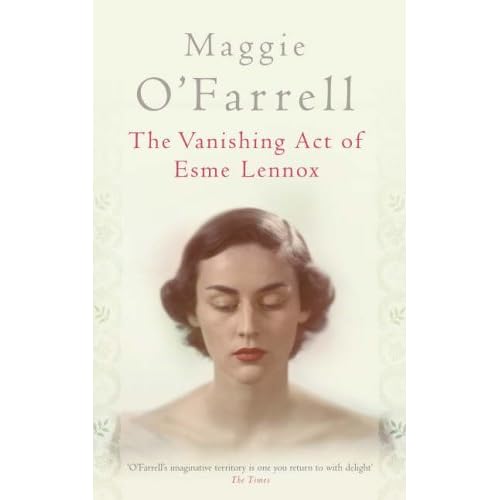
The Vanishing Act of Esme Lennox by Maggie O'Farrell

Iris Lockheart runs her own shop in Edinburgh. She has a string of
unfulfilled relationships to her name, her grandmother is in a world
of her own and her half brother constantly disapproves of the men
in her life. Then she gets a letter about Euphemia Lennox, a
relative she has never heard of who lives in a psychiatric unit. All
of a sudden Euphemia (or Esme as she prefers to be called) is
thrown into Iris' life and so begins a gradual untangling of threads
as to how Esme really ended up vanishing from polite society.
This is definitely one of those books you need to be in the right
mood to read. I think perhaps if I had been this book may have
scored 4 stars. As it was I initially found it a bit confusing. You keep
switching between the present, Esme's memories, Iris' memories
and Kitty's mind (these bits are particularly confusing as she
constantly switches to different time frames mid memory because
she's suffering Alzheimer's). Once you get past this and into the story
it's actually quite enjoyable. It shows how families coped with
post-colonialism, and how women were expected to behave and were
treated in 1930s polite society. It's dark in its way and as the story
progresses you gradually uncover more and more hidden secrets.
O'Farrell is also very good at throwing you off track. At first you
genuinely think Esme is not right in the head and then you realise
she's just different which wasn't acceptable at the time. There are
other instances of this but I won't spoil the storyline by telling you
about them!
In terms of writing style I'm not a huge fan of novels that flick
constantly between characters and at a rate of a page or two
between switches. It does eventually work and by the end of the
book you understand why its been written that way but initially it
is incredibly frustrating. I did admire the bits where Kitty is the one
reflecting because I felt it was very very well done. I haven't had to
deal with Alzheimer's myself but from what I know about it from
friends who have it is almost like the person has no control over
their chain of thoughts. They don't necessarily forget but their ability
to distinguish between reality, dreams and memories goes. It just
somehow felt a very real depiction of what someone with Alzheimer's
might be thinking.
As with 'The Kabul Beauty School' I finished the book feeling infinitely
glad that I live in the here and now and that even if I were living in
the 1930s I come from a working class family so wouldn't have had
the life Esme and Kitty did. I'm also glad that I have a much better
relationship with my own sister! Although I wasn't in the mood for it
this weekend it was still a good read and definitely worth trying. Just
have a bit of patience with it!
*3 stars*
This review has been submitted by e-mail.
If you enjoyed this why not try 'The Behaviour of Moths' by Poppy Adams?
If you want to find out more about this book why not visit Amazon UK by visiting the following link
The Vanishing Act of Esme Lennox

Saturday, July 07, 2007
The Secret Life of Bees by Sue Monk Kidd
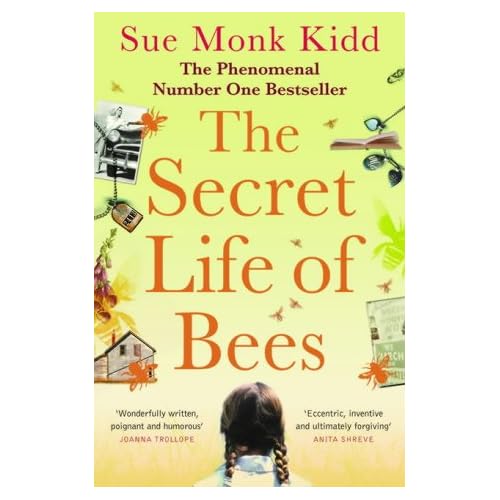
Lily lives on a farm in South Carolina with her father T Ray and Rosaleen. Rosaleen has been looking after Lily since her mother died ten years ago. Convinced she is responsible for her mother's death and an outcast in her small community Lily leads a lonely life. Then Rosaleen is attacked on her way to register to vote. Rosaleen is black and so she is arrested rather than her attackers. Lily helps Rosaleen escape and they become fugitives. On the run with no where to go they stumble across a brightly painted pink house and three sisters who tend bees. So begins a summer of discovery for Lily who must come to terms with her past and her present to be able to decide on her future.
This book is very much a 'coming of age story'. Set in the deep south of America in 1964, the year Lyndon Johnson passed the Civil Rights Act the key theme of this book is racism. Lily is in some ways quite naive about the racial hatred towards the black community. She is surprised by the attack on Rosaleen and has no idea her life might be in danger until her father tells her this when taking her home after being arrested with Rosaleen. Yet by the end of the book you're desperately wishing Lily's acceptance of the black people around her could be adopted by the white community as a whole. At one point a police officer visits the pink house and suggests that Lily shouldn't be lowering herself by staying there and I really just wanted to slap him one! Living in the modern world where such blatant racism is considered unusual and highly disgusting rather than the norm it is hard to really understand the vast majority of the white characters in the book. You sympathise with Lily and the black characters of this book.
The book is very easy to read, and very straightforward. I must admit that I wasn't expecting the twist at the end of the book and I applaud the author for not falling into the trap of making the ending 100% uplifting. I won't say more than that for fear of giving it all away! This book was also a very quick read, I started about 10:30pm last night and was finished by 1am. Although I couldn't put it down because I wanted to see what would happen it didn't grab me in the way that 'The Book of Lost Things' or 'The Kabul Beauty School' did. I can't decide if it was because I felt parts of this story were a little too 'convenient' and had a 'been done before' flavour. The book reminds me of 'How to Make an American Quilt', the 'Divine Secrets of the Ya Ya Sisterhood' and 'To Kill a Mockingbird'. It's got elements from each in it. It was a good read and I did enjoy it but it was very much a light read for me.
*3 stars*
Wednesday, July 04, 2007
Good book? Tell the world
Have you enjoyed reading the reviews here? If so, pass the reviews on! At the end of every post is a little envelope symbol. Click this and you can send your friends and family a copy of the review.
If you want to keep up to date with all the reviews here on Suggestions for a Bookworm, why not sign up to our RSS feed through sites like Bloglines? It's a great way of keeping up to date without waiting for notices on forums like MySpace (which I can't always guarantee access to).
Lastly, if anyone out there wants to link to Suggestions for a Bookworm, go ahead!
Tuesday, July 03, 2007
The Time Traveler's Wife by Audrey Niffenegger
When Henry first saw Clare, he thought she was beautiful and captivating. Clare on the other hand was astonished to see Henry looking so young. 'The Time Traveler's Wife' follows the story of Clare and Henry. Henry has a rare disorder which means that he inadvertently time travels. When he does he just disappears to a random point in the past or the future (usually within 50 years either way). When he goes he can take nothing with him, including clothes. Henry must learn how to survive his condition and the perils associated with it. Clare must learn to love Henry, despite never knowing if she will wake up beside him in the morning and the side effects of Henry's condition. Is it really possible to happy as the time traveler's wife?
Its hard to sum up what this book is about in an interesting way without giving too much away. The concept is simple, Henry time travels. Unlike H G Well's time machine inventor, or Marty McFly, Henry can't take anything with him and has no control over where or when he goes. It's a good twist to what might otherwise be another time travel story. Henry must survive his condition anyway he can and so you end up with amusing scenarios when he's teaching a younger version of himself to pick pocket or he ends up in fight because he's managed to steal some very unusual clothing. Added to this mix is Clare, who is head over heels in love with Henry and some how manages to put up with the bizarre events as they unfold. It was a good book, well written, and tugged at the heart strings.
I think it's a good book on the imperfections of relationships. Nothing is perfect, least of all love. Niffenegger manages to illustrate this in numerous ways and shows that even the best relationships have their crosses to bare. For Clare and Henry this is coping with the unpredictability of his condition and Clare's desperation for a child which Henry does not necessarily share 100%. Each of them is able to reach some level of understanding about the other to cope though. Clare accepts to an extent Henry's condition and lives with it, while Henry is able to see what it means to Clare to have a child (and ultimately helps her to do so).
Any book that involves moving backwards and forwards in time and space at random is going to have a difficult job keeping their audience from total confusion. This has to be one of the best efforts I've read though. Yes, there is always a small element of confusion, but I feel it adds something to the book. It echoes the confusion of the characters at various points (e.g. Henry when he *first* meets Clare when he's 28, Clare's confusion at times in her youth about Henry, various members of Clare's family feeling like they've seen Henry before, Gomez's confusion over seeing Clare and Henry together when he's supposedly dating someone else etc etc). Yet for the most part you could still follow the storyline.
It is a very cleverly crafted book, with characters with depth and enough imperfections to keep them interesting. Even Alba sounds slightly pretentious when we meet her at the age of 10. It's what keeps the story real. No angels and no devils. It makes the characters feel like real people, even goody-two-shoes Clare has her faults.
It's definitely worth picking up and trying.
*4 stars*
Its hard to sum up what this book is about in an interesting way without giving too much away. The concept is simple, Henry time travels. Unlike H G Well's time machine inventor, or Marty McFly, Henry can't take anything with him and has no control over where or when he goes. It's a good twist to what might otherwise be another time travel story. Henry must survive his condition anyway he can and so you end up with amusing scenarios when he's teaching a younger version of himself to pick pocket or he ends up in fight because he's managed to steal some very unusual clothing. Added to this mix is Clare, who is head over heels in love with Henry and some how manages to put up with the bizarre events as they unfold. It was a good book, well written, and tugged at the heart strings.
I think it's a good book on the imperfections of relationships. Nothing is perfect, least of all love. Niffenegger manages to illustrate this in numerous ways and shows that even the best relationships have their crosses to bare. For Clare and Henry this is coping with the unpredictability of his condition and Clare's desperation for a child which Henry does not necessarily share 100%. Each of them is able to reach some level of understanding about the other to cope though. Clare accepts to an extent Henry's condition and lives with it, while Henry is able to see what it means to Clare to have a child (and ultimately helps her to do so).
Any book that involves moving backwards and forwards in time and space at random is going to have a difficult job keeping their audience from total confusion. This has to be one of the best efforts I've read though. Yes, there is always a small element of confusion, but I feel it adds something to the book. It echoes the confusion of the characters at various points (e.g. Henry when he *first* meets Clare when he's 28, Clare's confusion at times in her youth about Henry, various members of Clare's family feeling like they've seen Henry before, Gomez's confusion over seeing Clare and Henry together when he's supposedly dating someone else etc etc). Yet for the most part you could still follow the storyline.
It is a very cleverly crafted book, with characters with depth and enough imperfections to keep them interesting. Even Alba sounds slightly pretentious when we meet her at the age of 10. It's what keeps the story real. No angels and no devils. It makes the characters feel like real people, even goody-two-shoes Clare has her faults.
It's definitely worth picking up and trying.
*4 stars*
Sunday, July 01, 2007
Authors N-Z
N
Niffenegger, Audrey
*The Time Traveler's Wife
Nix, Garth
*Grim Tuesday
O
O'Farrell, Maggie
*The Vanishing Act of Esme Lennox
P
Paolini, Christopher
*Brisingr
Pepper,Andrew
*The Last Days of Newgate
Pratchett, Terry
*Making Money
Price, Susan
*The Sterkarm Handshake
R
Rodriguez, Deborah
*The Kabul Beauty School
Rowe, Rosemary
*A Roman Ransom
Rowling, J.K.
*Harry Potter and the Deathly Hallows
Ryman, Geoff
*The King's Last Song
S
Sansom, C.J
*Sovereign
Scarrow, Simon
*Young Bloods
Scott, Michael
*The Alchemyst
Scott, Robert & Gordon, Jay
*The Hickory Staff: Eldarn Sequence Book 1
Sedley, Kate
*For King and Country
*The Eve of St Hyacinth
Seierstad, Asne
*The Bookseller of Kabul
T
Tannahill, Raey
*Having the Builders in
Todd, Marilyn
*Scorpion Rising
Tremayne, Peter
*A Prayer for the Damned
Y
Young, Simon
*Farewell Britannia
Niffenegger, Audrey
*The Time Traveler's Wife
Nix, Garth
*Grim Tuesday
O
O'Farrell, Maggie
*The Vanishing Act of Esme Lennox
P
Paolini, Christopher
*Brisingr
Pepper,Andrew
*The Last Days of Newgate
Pratchett, Terry
*Making Money
Price, Susan
*The Sterkarm Handshake
R
Rodriguez, Deborah
*The Kabul Beauty School
Rowe, Rosemary
*A Roman Ransom
Rowling, J.K.
*Harry Potter and the Deathly Hallows
Ryman, Geoff
*The King's Last Song
S
Sansom, C.J
*Sovereign
Scarrow, Simon
*Young Bloods
Scott, Michael
*The Alchemyst
Scott, Robert & Gordon, Jay
*The Hickory Staff: Eldarn Sequence Book 1
Sedley, Kate
*For King and Country
*The Eve of St Hyacinth
Seierstad, Asne
*The Bookseller of Kabul
T
Tannahill, Raey
*Having the Builders in
Todd, Marilyn
*Scorpion Rising
Tremayne, Peter
*A Prayer for the Damned
Y
Young, Simon
*Farewell Britannia
Subscribe to:
Posts (Atom)